

Pension markets rarely stand still and neither do the decisions facing plan sponsors.
In this issue, our Defined Benefit team highlights the market, regulatory, and plan design developments shaping today’s pension landscape.
As part of our continued evolution, we will soon transition to the Wealthspire name, marking an exciting new chapter for our firm. This will be the last issue of the Pension Pulse under the Fiducient brand.
While our name will change, we remain the same firm you know and trust, grounded in the same team, values and disciplined approach.
Equities Show Resilience as Rates Swing, Plan Sponsors Benefit
The second quarter of 2026 was a story of recovery as markets rebounded sharply from the conflict-driven sell-off that closed the first quarter. Tensions between the U.S. and Iran de-escalated, leading to the tenuous reopening of the Strait of Hormuz. Energy prices tumbled, mildly easing inflation concerns.
Discount rates used to value liabilities declined from 5.79% in April to 5.70% in June, but the calm was short-lived. Since quarter-end, renewed inflation concerns driven in part by the re-instated closure of the Strait of Hormuz and renewed tariff uncertainty, pushed rates sharply higher. As of July 23, 2026, the FTSE Pension Liability Index exceeded 6.04%, a level not seen since March 2010.
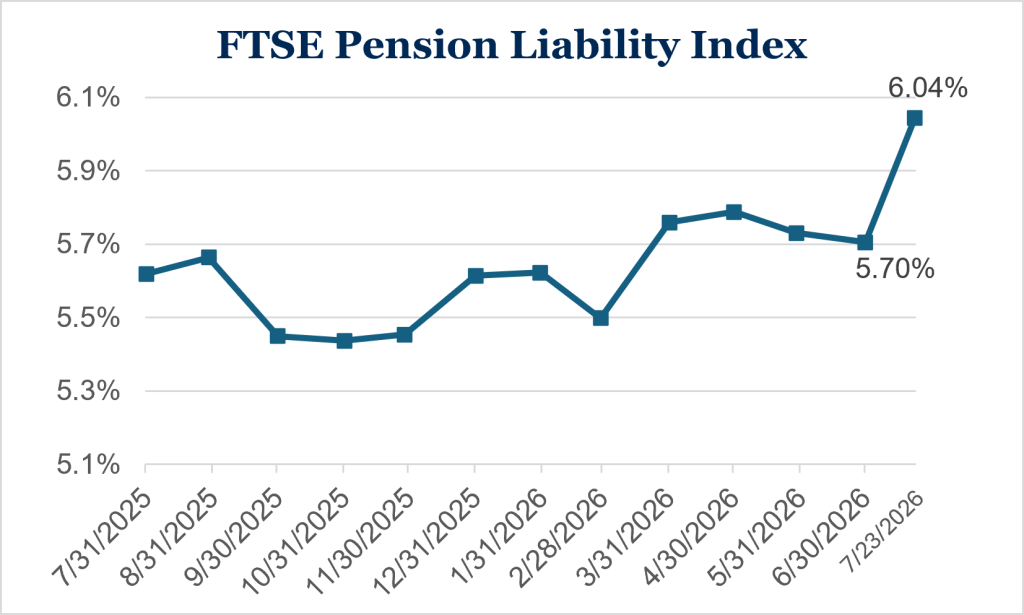
1FTSE Pension Liability Index provided by London Stock Exchange Group plc.
Insights From Your Trusted Team
Secure 2.0 – Plan Document Amendment Approaching
Although most SECURE 2.0 provisions have already become operationally effective, plan sponsors generally have until December 31, 2026 to formally amend their retirement plan documents.1 Defined benefit and cash balance plan sponsors should work with ERISA counsel, actuaries, and administrators to help ensure all required provisions have been implemented operationally and properly reflected in the plan document before the amendment deadline.
Common provisions requiring review include the increase in the required minimum distribution age to 73 (and eventually 75 for younger participants), reduced excise taxes for missed RMDs, expanded distribution options for certain participants, and revisions affecting plan administration and participant communications. Sponsors should also review any discretionary changes adopted since SECURE 2.0’s enactment to ensure those provisions are formally incorporated into governing documents before year-end.
1Source: Diane Dygert & Sarah Touzalin, “Upcoming Amendment Deadline: Is Your Company’s Retirement Plan Ready?,” Seyfarth’s Beneficially Yours, Apr. 8, 2026.
Improved Funded Status Provides Options for Plan Sponsors
Corporate pension plans entered midyear on stronger footing. Equity gains were the primary driver, helping the average funded ratio for Russell 3000 companies rise to 107.9% at June 30, an impressive 5.2% year-to-date improvement despite first-quarter weakness. Plans with larger equity allocations generally benefited most, while liability-driven investment strategies continued to help dampen funded status volatility.
Many pension plans now find themselves fully funded or overfunded. Sponsors should begin evaluating how pension surplus aligns with their long-term objectives, whether that means supporting future retirement programs such as a cash balance plan, facilitating workforce initiatives, preserving balance sheet benefits, or positioning the plan for a future risk transfer transaction. Proposed legislation including the Strengthening Benefit Plans Act of 2025, could expand sponsor flexibility in utilizing surplus assets.
Read our entire January 2026 edition of The Pension Pulse Newsletter for more insights. Click below!